Restaurant and bar inventory management
In food and beverage, margin is thin and it leaks. A few points of waste, a little over-ordering, a case of wine that walks: any of those is the difference between a profitable week and a flat one. The fix isn’t a bigger spreadsheet. It’s a small set of habits that keep your counts honest and your orders right-sized. If you run a coffee shop or café, the same ideas apply with a perishable-first twist in our café inventory guide.
Set a par level for every key item
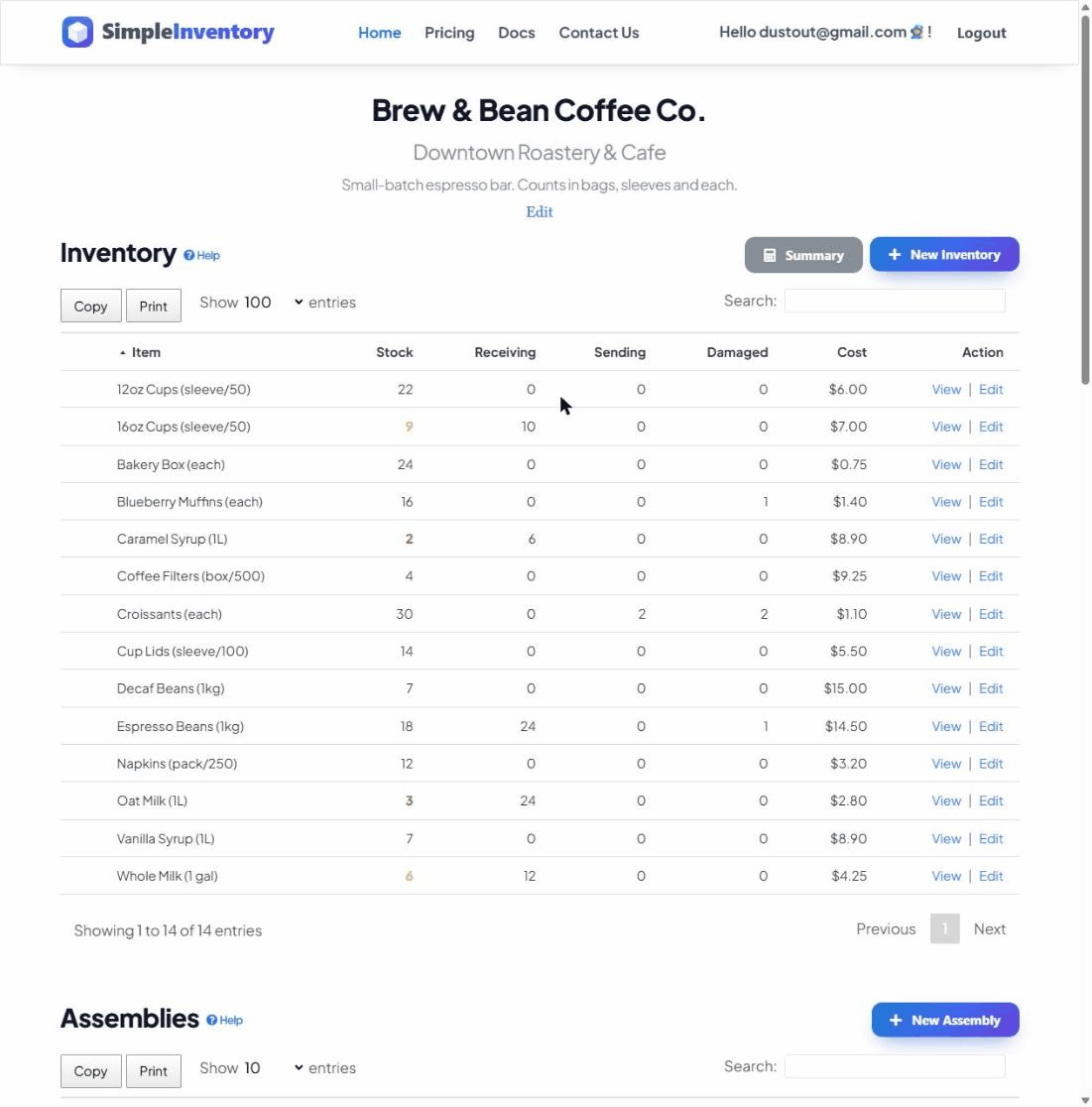
A par level is the target amount you want on hand before the next delivery. Anything below par is a reorder. It’s the restaurant word for a reorder point: you don’t need to know you have exactly 9 bottles of house red, you need to know you’re under the 12 it takes to get through a Friday and Saturday. Set a par for every fast mover on both sides of the menu: proteins, produce, dairy, dry goods, beers, wines and your well spirits.
Save those as warning and critical levels per item so the system flags them for you, and they land on the order list instead of living in a manager’s head.
Count on a schedule, not in a panic
A giant monthly stocktake is already out of date by the time you finish it. A quick weekly count of your key items (or a count right before each order) is faster and far more useful. Running out of a headline dish or a popular pour costs you covers and goodwill, so count the things that hurt most when they’re gone. Cycle count your high-cost items, expensive cuts, premium spirits and anything easy to lose, more often than the cheap stuff.
Rotate stock so nothing dies on the shelf
Perishables follow first-in, first-out, and anything dated follows first-expiry, first-out: the item that spoils soonest gets used first, regardless of when it arrived. Date your stock and rotate it on the way in so the back of the walk-in doesn’t become a graveyard. More on the methods in FIFO vs. LIFO vs. FEFO.
Track waste and spoilage
Spoiled produce, over-prepped specials, dropped plates, a keg that blew foam all night: that’s real inventory leaving without a sale. Log it. When you can see that a particular item gets binned every week, you can right-size the order, adjust prep par, or fix the prep that’s causing it.
Waste is also half of the food cost picture. Conceptually, food cost percent is the cost of goods you actually used over a period divided by the sales those goods drove. Counting accurately and logging waste is what makes that number trustworthy in the first place.
The bar has its own rules
Behind the bar, portioning is everything: a heavy free pour quietly turns a 25-drink bottle into a 20-drink bottle and your margin goes with it. Use jiggers or controlled pours, and count your high-value spirits closely and often. A back bar of premium bottles is a lot of money sitting on a shelf, so treat it like the high-cost inventory it is and weigh or tenth-count open bottles rather than eyeballing them.
Tie ordering to your suppliers
Once par levels and counts are honest, ordering gets boring in the best way. Turn what’s below par into a purchase order to the right supplier, and let the stock flow in when the delivery is received so your counts update themselves. See how that flows in orders and receiving.
All of this protects cash, not just the storeroom. Inventory you don’t need is money you can’t spend, which is the heart of working capital.