What is your inventory worth? Why you should be able to answer in one click
Ask most small business owners what their stock is worth right now and you get a pause, then a guess. That gap is expensive. The value sitting on your shelves is often one of your largest assets, and a surprising number of decisions, from an insurance claim to a loan application to a tax return, hinge on being able to state it accurately and on demand.
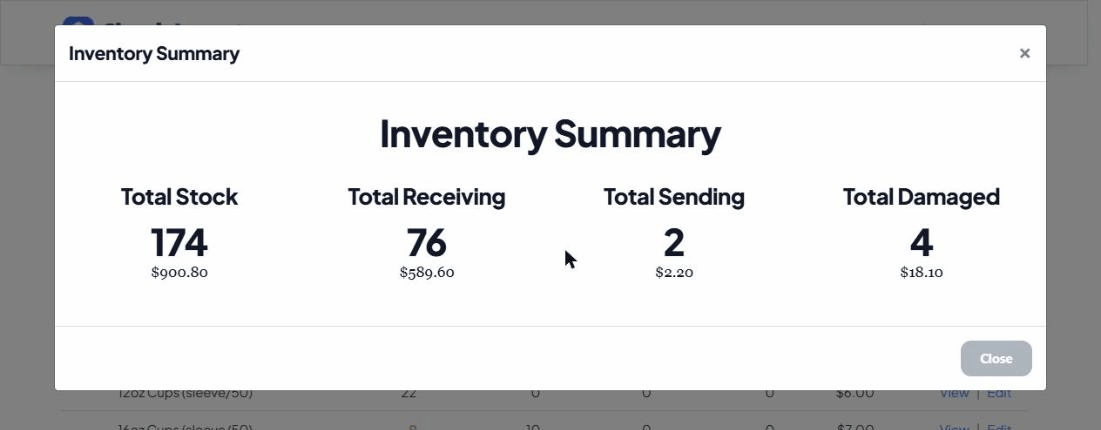
Valuation isn’t just a year-end chore
Knowing the dollar value of your stock, at any moment, quietly powers a lot of the business:
- Insurance. If a flood or fire hits the stockroom, your payout is only as good as your records. A current valuation is the difference between a clean claim and a fight.
- Financing. Lenders and investors treat inventory as collateral and as a signal. A number you can produce on the spot reads very differently from a shrug.
- Tax and accounts. Closing stock value flows straight into your cost of goods sold and your bottom line.
- Buying decisions. Seeing that a third of your capital is tied up in slow movers changes what you order next.
The report you shouldn’t have to build by hand
The traditional way to get this number is to export everything to a spreadsheet and rebuild a quantity-times-cost formula every quarter. That’s slow, error-prone and instantly out of date. A live system should hand you the valuation report directly: every item, its stock, its unit cost and its extended value, totalled, as a clean CSV for your spreadsheet or a print-ready PDF for a meeting or your accountant.
The other two reports that earn their keep
Valuation rarely travels alone. The low-stock report lists everything at or below its warning and critical levels, most urgent first, so it doubles as a buying list. The transaction history export is your audit trail: every adjustment, who made it, and whether it came from a person or an AI assistant. Together they answer the three questions a business actually asks of its inventory: what is it worth, what do we need, and who changed it.