Cycle counting vs. full physical counts: which is right for your team?
Both methods answer the same question (does our recorded stock match what’s physically there?), but they get there very differently. Here’s how to pick the one that fits your team, or blend the two.

Full physical counts
You count everything at once, usually on a set date. It’s thorough and gives a clean line in the sand, but it typically means pausing operations and pulling everyone in for a day.
- Best for: year-end, small catalogs, or audits.
- Downside: disruptive, infrequent, so errors hide for months.
Cycle counting
You count a small slice of inventory on a rolling schedule, so something is always being checked without ever shutting down. High-value or fast-moving items get counted more often.

- Best for: ongoing accuracy, busy operations, larger catalogs.
- Downside: needs a little discipline and a system to track what was counted when.
Which should you choose?
For most growing teams, cycle counting wins, because small, frequent counts catch problems while they’re cheap to fix. Many businesses do both: continuous cycle counts plus one full count a year for the books.
Make either one painless
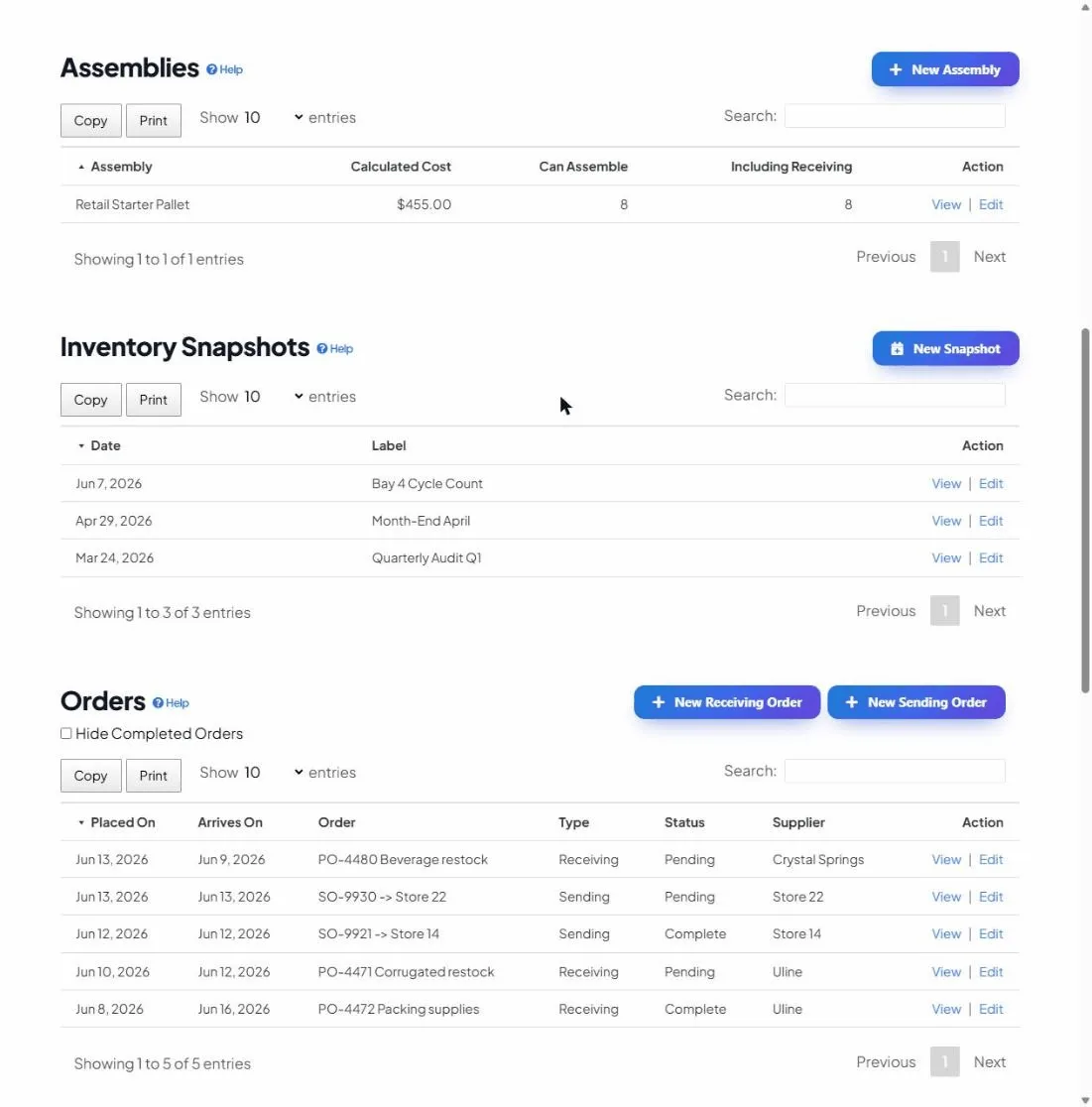
The hard part of any count is having a clean reference while stock keeps moving. Capture a snapshot, scan items to enter physical counts, and reconcile against the frozen reference. For the full step-by-step, see how to run a stock reconciliation.